
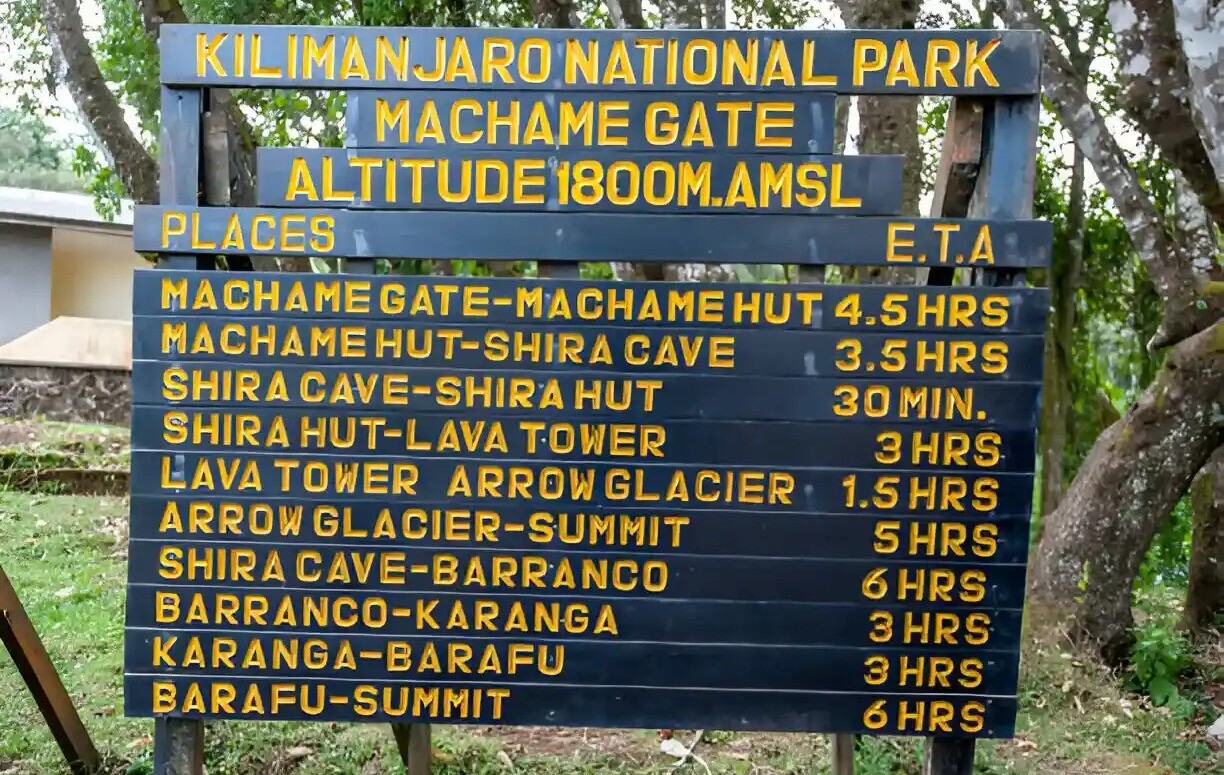
Machame Gate is not a dramatic place. There's a car park, a wooden registration building, a noticeboard with rules and altitude warnings, and a great deal of cheerful, unhurried chaos. Rangers check paperwork. Bags get weighed and distributed. People photograph the sign. And somewhere in all of this, almost without noticing, you cross from the world you came from into something else entirely.
Day 3 is the first day on the mountain — the first of seven days of actual climbing, the day the expedition stops being a plan and becomes a thing that is happening to you. Everything before this was preparation.
The Gate
Machame Gate sits at 1,800 metres, at the edge of the national park, where the tarmac road ends and the forest begins. The drive up from Arusha takes a couple of hours, winding through coffee plantations and small villages on the lower slopes of the mountain, and by the time the gate comes into view most people have been quiet in the vehicle for a while, watching Kilimanjaro grow larger through the windscreen.
At the gate, the guide takes over. There are forms to fill in, permits to present, names to enter in the park register. This takes longer than expected, as these things always do, and while it happens the porters are already at work — sorting the equipment bags, loading up, adjusting the straps and folds and balances that will carry everything up the mountain. They move with a practiced efficiency that makes the whole operation look easy, which it is not.
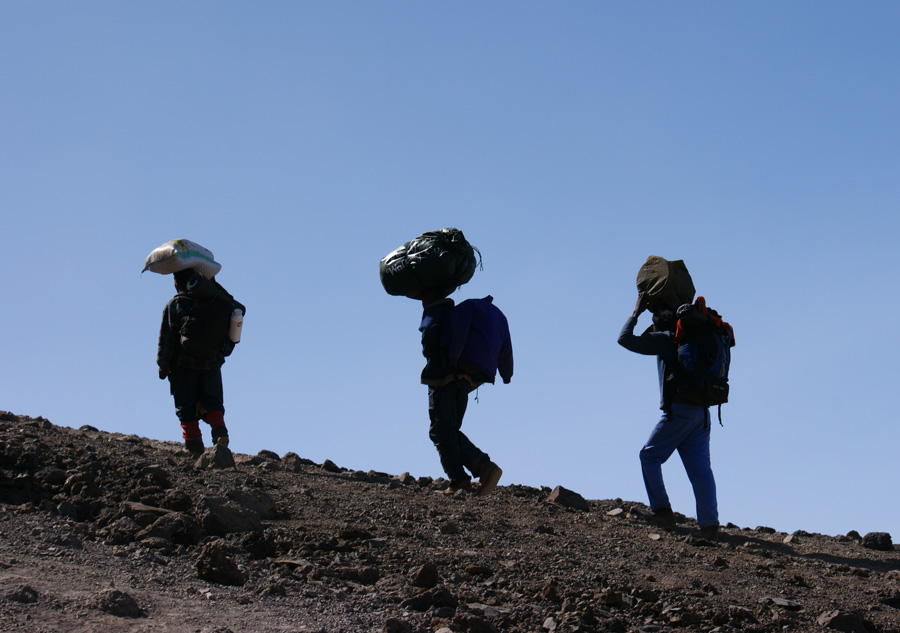
Then the bags go up. Onto heads, mostly — a technique that looks improbable and turns out to be biomechanically sound, distributing weight through the spine in a way that a backpack on the shoulders cannot match. A porter with twenty kilos on his head walks with a straighter back and a steadier pace than most climbers manage with three kilos on theirs. This will become apparent in the forest.
Pole Pole
And then, before you have quite finished adjusting your straps and checking your pockets for the third time, the porters are gone. Not walking — gone. They move into the treeline at a pace that is somewhere between a brisk walk and a trot, loads balanced perfectly on their heads, and within minutes the forest has swallowed them completely.
You look at the guide. The guide looks at you. He makes a small, patient gesture with his hand — the universal signal for calm down, we have time — and says the two words you will hear more times over the next seven days than any others.
Pole pole.
Slowly slowly. It is, at this point, slightly comic. You have trained for months. You are excited. You are standing at the foot of the highest mountain in Africa and you are being asked to slow down before you have taken a single step. The guide has seen this reaction before — has seen it hundreds of times, on this exact path, with this exact look on people's faces — and he smiles and starts walking.
🐢 Why pole pole is not optional
The instinct on Day 3 is to move fast — you feel strong, the forest is beautiful, the excitement is real. But the body's acclimatization to altitude is a slow, cumulative process that cannot be hurried. Every experienced guide on Kilimanjaro knows that the climbers who push hardest on the early days are the ones most likely to struggle later. The pace that feels frustratingly slow at 1,800 metres is the pace that gets you to 5,895 metres. Pole pole is not advice. It's the strategy.
Into the Forest
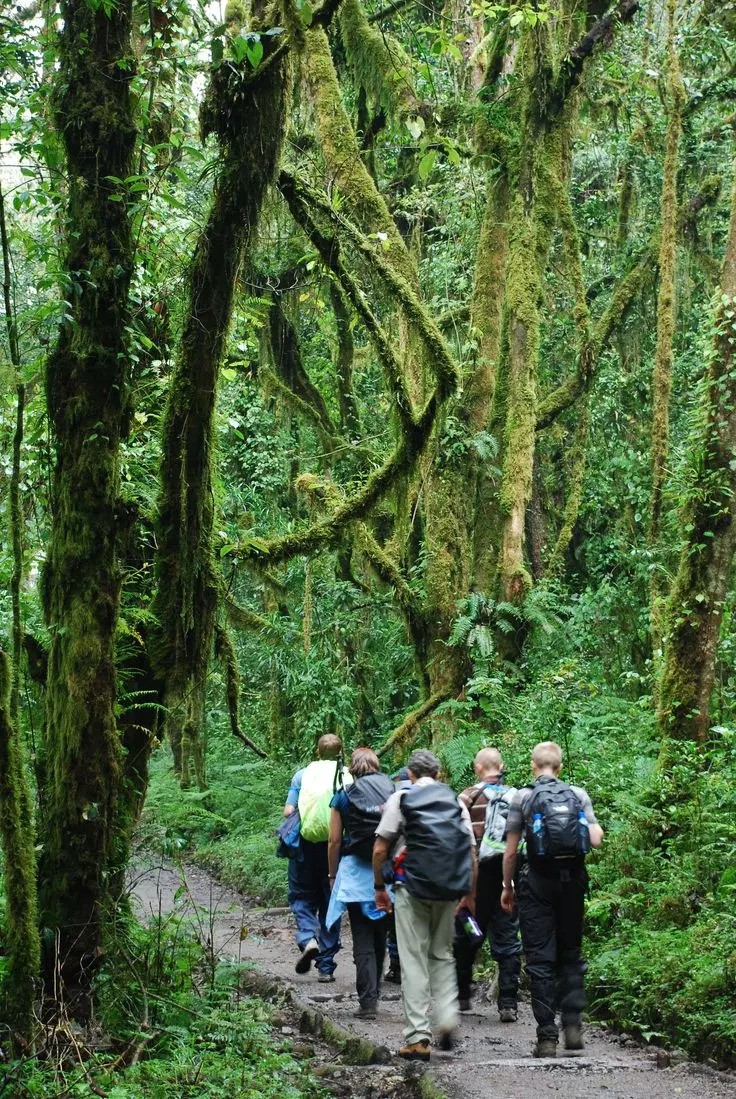
The rainforest on the lower slopes of Kilimanjaro is extraordinary, and the path through it on Day 3 is one of the most beautiful stretches of walking on the entire route. The canopy closes overhead almost immediately, filtering the light into something green and diffuse. The air is warm and damp and smells of earth and leaves and something faintly floral. The sounds of the gate — the voices, the vehicles, the last traces of the ordinary world — fade within ten minutes.
The path climbs steadily but not steeply through moss-covered trees draped in old man's beard lichen, past ferns the size of small trees and flowers that seem too vivid to be real. Everything is wet, even when it isn't raining — the forest generates its own moisture, condensing mist from the air and dripping it slowly through the layers of vegetation. By midday the clouds often come in from below and the forest becomes a place of shifting visibility, trees appearing and disappearing in the white.
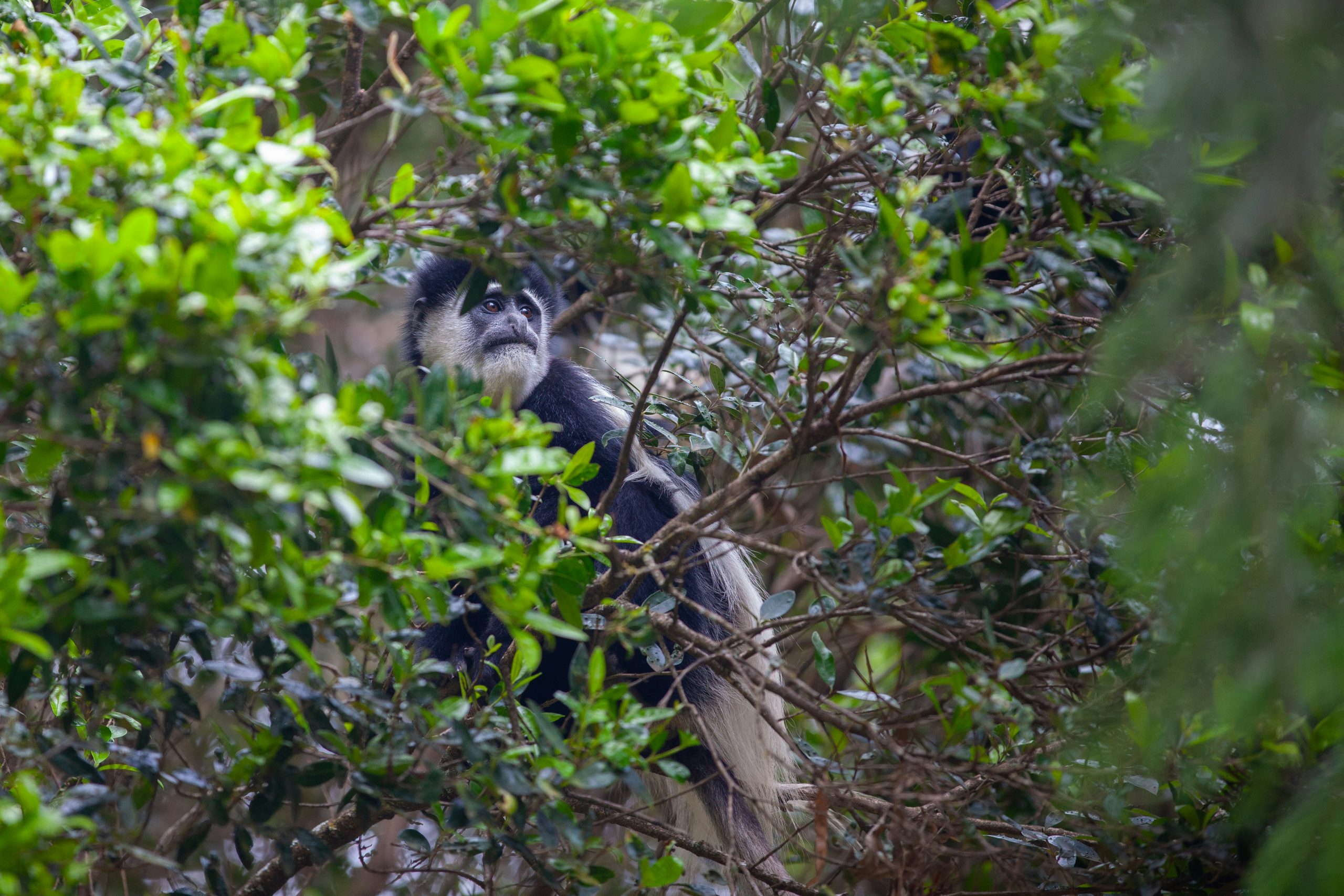
The colobus monkeys are usually heard before they're seen — a crashing in the canopy, a flash of black and white, and then stillness again. They move through the treetops with a loose-limbed ease that makes the whole forest feel occupied, alive in a way that goes beyond the vegetation. Occasionally one will sit on a branch close to the path and watch the procession of humans below with an expression of mild, aristocratic indifference. Sunbirds dart between the flowers, iridescent and quick. Somewhere in the upper canopy, a Hartlaub's turaco calls — a sound like nothing you've heard before, loud and insistent and strangely tropical for a mountain that will have you sleeping on ice in five days' time.
The forest also does something subtler, which is to make the mountain disappear. From Arusha you can see Kilimanjaro on clear mornings, enormous and white above the clouds. At the gate you are standing at its foot. But inside the forest there is no mountain — only trees, and path, and the next hundred metres of trail. The scale of what you're doing becomes abstract. This is, it turns out, exactly what you need on Day 3.
The Long Middle Hours
The day is eleven kilometres and somewhere between five and seven hours of walking, depending on pace and rest stops. Lunch is taken on the trail — the cook has gone ahead with the porters and somehow, in defiance of all logic, produces a hot meal from a bag in the middle of the forest. There is soup. There are sandwiches. There is fruit. People sit on rocks and roots and eat with the appetite that comes from moving slowly through fresh air for several hours, and the conversation is easy and unhurried in a way that it hasn't been since before the journey began.
The forest gives way gradually in the upper section of the day's walk, the dense canopy thinning as the altitude rises and the vegetation shifting toward heathland — shorter, sparser, the first hints of the open moorland that will characterize the days ahead. The light changes as the trees thin out, becoming wider and cooler, and you get the first proper views of the slopes above you, the mountain becoming real again after hours of invisibility.
"I remember thinking, somewhere in the forest: I have no idea where I am, I have no idea how far we've walked, and I'm completely fine with that. I don't think I've ever felt that way before." - Arnold-Jan
"The porters passed us again on the way back down — going the other direction, empty-handed now, moving at that same incredible pace. One of them was whistling." - Judith
Machame Camp
Machame Camp arrives at 2,834 metres, in a clearing above the treeline where the forest gives way to open ground and the sky opens up after the long green tunnel of the day's walking. The tents are already up when you get there. The porters, who left the gate before you, have been here long enough to have everything organized and the water boiling.
The first thing most people do is stop and look around. To the north, Kilimanjaro's summit cone is visible above the clouds — white and distant and, for the first time, genuinely close. Below, the forest stretches back down the slope toward the invisible world of roads and towns and ordinary life. The sun, if it isn't clouded over, is dropping toward the western horizon and turning everything a deep, warm gold.
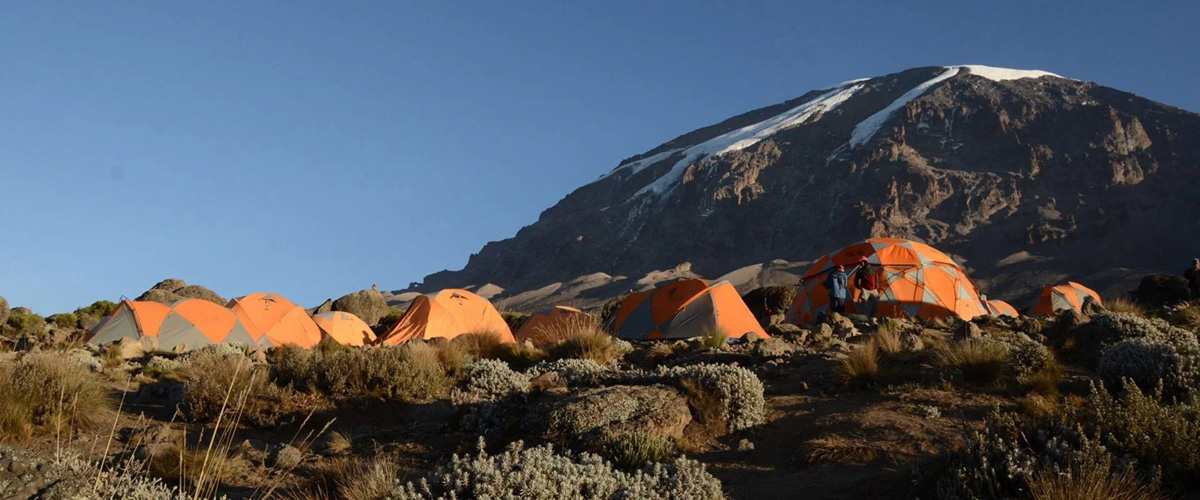
The guide appears with tea. Hot, sweet, slightly too strong — exactly right. You sit down with it and feel the day settle into your legs and your shoulders and the soles of your feet, that particular tiredness that is also a kind of satisfaction, the tiredness of having used your body for the thing it was made for.
Dinner is served in the mess tent as the temperature drops and the stars come out above the camp — more stars than most people are used to, at this altitude and this distance from city lights. Someone points out the Southern Cross. Someone else asks the guide how far to the summit from here. He tells them, and the number — three thousand metres of altitude still to gain — lands quietly around the table.
Nobody says much after that. But the silence is a good one. You have come eleven kilometres and gained over a thousand metres of altitude and walked through one of the most beautiful forests in Africa, and tomorrow the mountain begins in earnest. You pull your jacket tighter, finish your tea, and think: yes. This is exactly where I want to be.
