
Good preparation makes the difference between enduring and truly enjoying. Physically, mentally and practically.
At 5,895 meters, Kilimanjaro is Africa's highest mountain. The low oxygen pressure and consecutive hiking days require respect, preparation and the right pace.
To reach the summit, your body must be sufficiently acclimatized and in good condition. That's why it's important to work on your fitness before the expedition.
Additionally, equipment plays a crucial role. Good gear makes the difference between comfort and suffering.
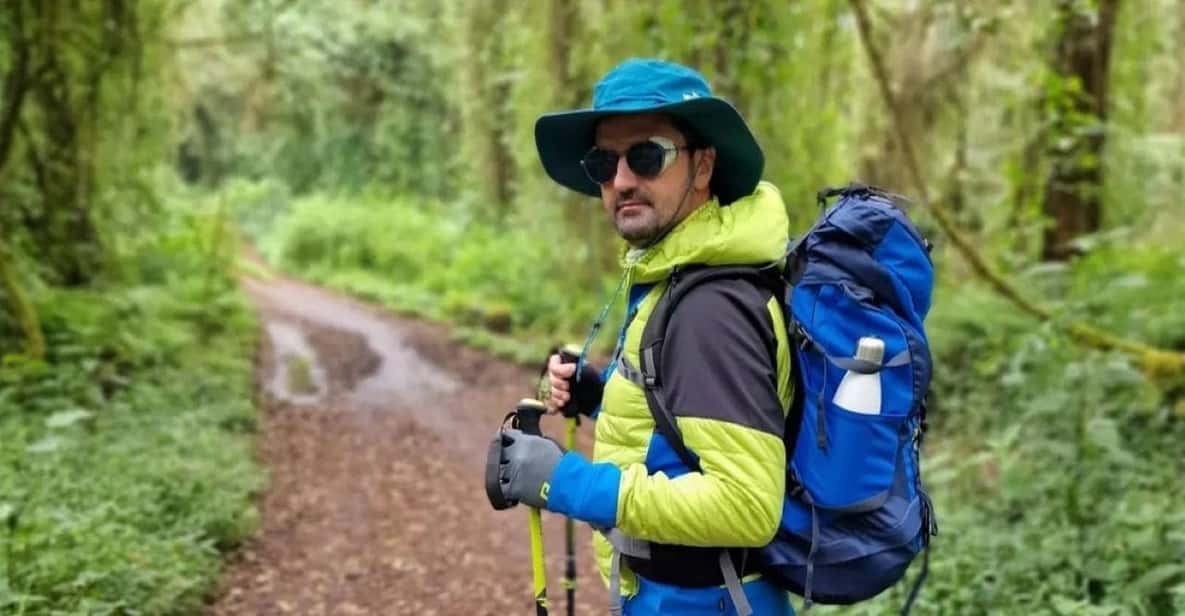
It's important that your body is well prepared for the physical challenge of Kilimanjaro. The better prepared you are, the better you'll conquer the roof of Africa.
The type of conditioning is more important than pure fitness. Kilimanjaro is not a sprint, but seven days of controlled hiking. The best training is simple: lots of hiking.
Preferably with elevation changes and with a daypack of at least 3 liters of water or 3 kg. Living on the coast? Use the dunes. Stair climbing is better than running.
Can't train outdoors, use a treadmill with adjustable incline.
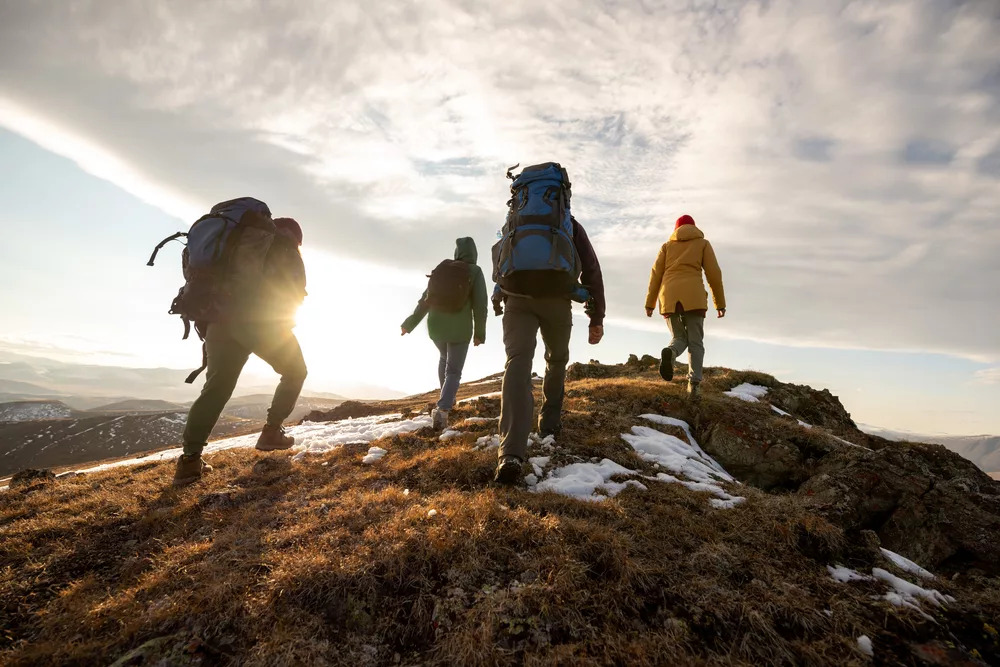
In the first week, the focus is on building a basic fitness level and creating a regular routine. You do a solid walk or short hike of 45 to 60 minutes three times a week. Additionally, you train your legs with bodyweight exercises twice. On the weekend you make one longer walk or hike of two to three hours.
In week two you increase the intensity and continue working on your strength. You walk or do stair climbing three times a week with a light backpack of about five to six kilos. The strength training remains twice a week, but now with extra resistance. On the weekend you plan one hike of three to four hours, preferably in hilly terrain.
This week is about more elevation gain and increasing your endurance. You make three to four hikes, also adding stair or hill intervals. The strength training consists of two sessions focused on stability and single-leg exercises. On the weekend you do one longer hike of four to five hours and try to be active two days in a row.
In week four you simulate fatigue through back-to-back hikes. During the week you make two gentle but longer walks of sixty to ninety minutes. You do two strength training sessions focused on glutes, calves and step-ups. On the weekend you plan two hikes of three to five hours on consecutive days.
This is the peak week where you simulate the climb conditions as closely as possible. You make three to four longer hikes with extra weight in your backpack. The strength training is reduced to one light session. On the weekend one long hike of six to seven hours is planned, with a full daypack.
The last week is all about tapering (consciously reducing), rest and mental preparation. You make one to two short, relaxed walks. You don't do strength training anymore or at most one very light session. On the weekend you only make a short walk or take complete rest, so you start the climb fresh and prepared.
It's possible for everyone to successfully reach the summit of Kilimanjaro. The biggest challenge is often in the mind.
Talk to others about the adventure that awaits you so you make a mental contract with yourself. Share your #ExpeditionKilimanjaro on social media.
Do it for someone. Carry a photo that you can look at again on the mountain in the evening. Or carry another talisman, like a rabbit's foot or four-leaf clover.
Even better? Have your expedition sponsored for a good cause. That gives extra motivation when things get tough.
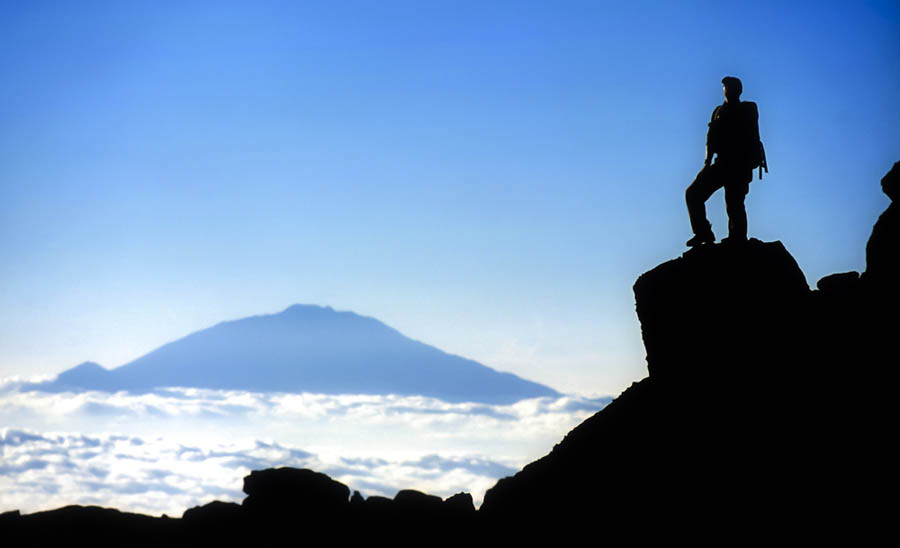
Every training hike brings you one step closer to standing on the roof of Africa
Don't forget that you'll be staying on a mountain for 7 days and 6 nights. Warm, dry and well-chosen clothing is essential.
Download the complete packing list to print or save as PDF:
📄 Complete packing listEveryone who is not used to high altitudes will eventually experience altitude sickness. Certainly 90% of all people who climb Kilimanjaro suffer from altitude sickness to some extent.
Altitude sickness is caused by the body not being able to adapt quickly enough to the decreased level of oxygen in the air at increased altitude.
The most common symptoms are: headache, lightheadedness, nausea, decreased appetite, tingling sensation in toes and fingers and slight swelling of ankles and fingers.
These mild forms are not serious and normally disappear within 48 hours. Good acclimatization and drinking plenty of water are the best protection.
It is strongly discouraged to use agents such as acetazolamide (like Diamox) against altitude sickness, unless specifically prescribed by a specialist.
The side effects may be worse than the altitude sickness itself, which is combated as much as possible by proper acclimatization during the expedition.
Using such agents? Report this to your head guide at the start of the expedition.
Consult your travel clinic in time for vaccinations such as Hepatitis A, Typhoid and Yellow Fever.
Malaria occurs in Tanzania. Currently, various preventive medications are available that are more effective against certain Chloroquine-resistant malaria mosquitoes currently active in Tanzania. Discuss this with your doctor.
Budget approximately $20 per day in cash for personal expenses.
Preferably use US dollar bills from after 2006. Damaged bills are sometimes refused.
Good preparation increases your chance of success and an unforgettable experience.