
At Barafu Camp, 4,673 meters above sea level, Maria sat in the mess tent with her head in her hands. "I can't do this," she said quietly. "I need to go down." In 12 hours, she would be standing at the summit of Africa. But right then, she was absolutely convinced she was done.
This is Maria's story. It's not unique – I've coordinated dozens of expeditions where climbers face this exact moment. But what happened next matters, because it's a story about what's actually required to summit Kilimanjaro. And it's not what most people think.
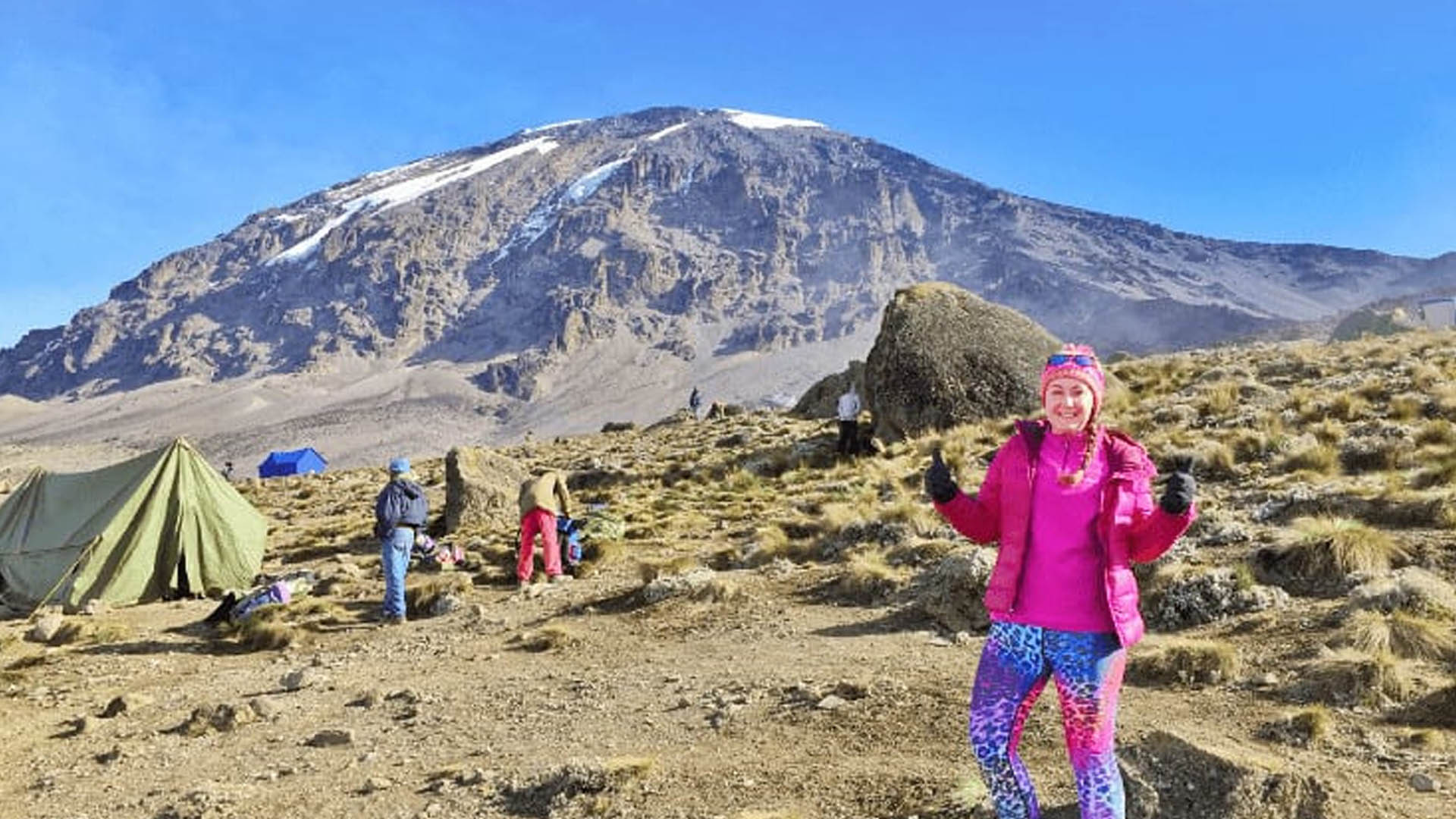
Day Six: When Everything Falls Apart
Maria had been doing well. Really well. A 34-year-old teacher from Belgium, she'd trained consistently for three months. She'd handled the first five days of the Machame Route with relative ease – maybe a headache here and there, some fatigue, but nothing serious.
Then came Barafu Camp.
For those who haven't been there, Barafu is harsh. It sits on a rocky ridge with no vegetation, no protection from wind, and air that feels impossibly thin. You arrive around midday, try to rest, and wake up at 11 PM to start the summit push.
Maria's group arrived at Barafu just after lunch on Day 6. Within an hour, she started feeling different.
"I felt okay when we got there. A bit breathless, but that was normal by then. But after trying to rest in my tent, everything changed. My head started pounding – not just an ache, but this pressure behind my eyes. I felt nauseous. Every breath felt like work."
"I tried to eat dinner but couldn't. The thought of food made me want to vomit. And the worst part? I couldn't stop thinking: I have to climb for another six hours tonight. There's no way."
— Maria, recalling her afternoon at Barafu Camp
The Conversation
I wasn't at Barafu Camp that day – I was in Phnom Penh, coordinating the expedition remotely as always. But our lead guide, Jackson, has worked with our groups for over a decade. He knows altitude sickness. And he knows the difference between someone who needs to descend immediately and someone who's experiencing the normal, brutal reality of 4,673 meters.
Jackson sat with Maria in the mess tent around 6 PM, about five hours before wake-up.
Jackson's approach in these moments has always been the same: Listen first. Don't minimize their feelings. Don't give false encouragement. Just understand what's happening.
"Tell me what you're feeling," he said to Maria.
She listed everything: the headache, the nausea, the breathlessness, the overwhelming sense that she couldn't continue. But as she talked, Jackson was assessing. Not just her symptoms, but how she was talking, how she was moving, her color, her coordination.
The medical evaluation was straightforward: her oxygen saturation was 87% – low, but normal for Barafu. Her vital signs were stable. She showed no signs of serious altitude illness like cerebral or pulmonary edema. What she had was Acute Mountain Sickness (AMS) – the common, miserable, but manageable form of altitude sickness that affects about 90% of climbers on Kilimanjaro.
But knowing the medical facts and feeling capable are completely different things.
The Truth Jackson Told Her
What Jackson said next wasn't motivational speech material. It was just truth.
"He said: 'Maria, you feel terrible. That's altitude. Almost everyone at this camp feels terrible right now. Your body is not in danger, but your mind thinks it is.'"
"Then he said something that changed everything: 'You don't have to decide right now whether you can summit. You just have to decide if you can wake up at 11 PM and start walking. That's all. Just start walking. We'll make every other decision after that.'"
— Maria
Breaking it down. Not "Can you climb for six more hours?" Not "Can you reach the summit?" Just: Can you wake up and start walking?
That, Maria could imagine. Maybe.
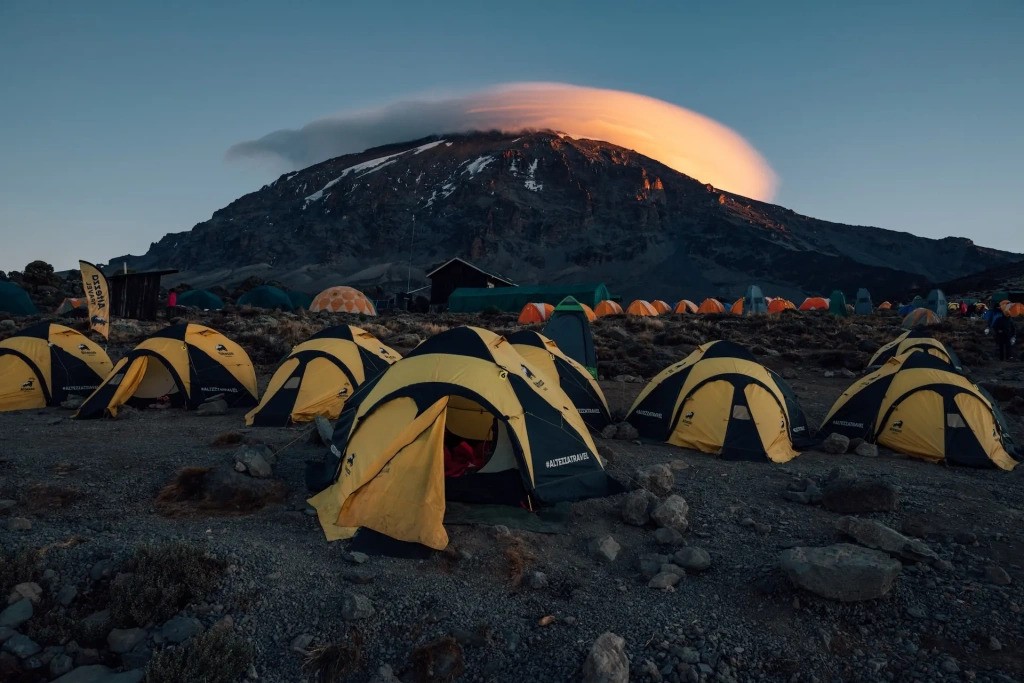
11 PM: The First Test
When the wake-up call came, Maria still felt awful. Her headache persisted. She managed to force down some porridge and tea, but the nausea hadn't left.
But she got dressed. She put on her layers, laced up her boots, grabbed her poles. She did the next small thing, and then the next.
At midnight, she stepped out of the mess tent into the cold darkness and took her first step toward the summit.
The Climb: One Step at a Time
Summit night on Kilimanjaro is brutally simple: you climb in the dark, moving slowly up steep scree, for hours. No distractions. No views. Just the circle of light from your headlamp, the crunch of volcanic rock under your boots, and the sound of your own breathing.
For the first hour, Maria focused only on not stopping. Not thinking about the hours ahead, not thinking about the summit – just not stopping.
"Jackson was right behind me the whole time. Every time I thought about stopping, I'd hear his voice: 'Pole pole. One step. That's all.' So that's what I did. One step. Then another. I didn't think about anything else."
— Maria
Around 2 AM, something shifted. Maria's headache began to ease slightly. The nausea faded. Her breathing, while labored, felt more manageable. Her body was adjusting – acclimatizing in real-time as she climbed.
This is one of the paradoxes of altitude: sometimes, the only way through is up. Your body sometimes needs the challenge of continued ascent to trigger adaptation.
5:30 AM: Stella Point
When Maria crested the crater rim at Stella Point (5,739m), she broke down crying. Not from sadness or exhaustion, but from something else entirely.
"I couldn't believe I was there. Six hours earlier, I was convinced I'd have to turn back. And there I was, on the crater rim, watching the sun rise over the clouds. I kept thinking: I almost quit. I almost gave up on this."
— Maria
Many climbers stop at Stella Point. It's technically on the summit rim. But Uhuru Peak – the true highest point – is still an hour away across the crater.
Jackson asked Maria: "Do you want to continue to Uhuru?"
She looked at him like he was crazy. "Are you joking? After all this? Of course I'm going to Uhuru."
The Summit
At 6:47 AM on a clear November morning, Maria stood at Uhuru Peak: 5,895 meters, the highest point in Africa.
The photo shows her arms raised, huge smile, tears on her cheeks. But what the photo doesn't show is what got her there: not superhuman strength or exceptional fitness or lucky genetics.
What got Maria to the summit was breaking down an impossible task into possible steps.
What Maria's Story Teaches Us
After coordinating hundreds of expeditions since 2008, I've learned something important: the climbers who succeed aren't necessarily the strongest or best prepared. They're the ones who can manage the mental challenge of continuing when everything in their body screams to stop.
Maria's experience at Barafu Camp is normal. The doubt, the physical symptoms, the overwhelming sense of "I can't" – nearly every climber faces some version of this. What differs is what happens next.
The lessons from Maria's story:
- Feeling terrible at altitude is normal. About 90% of Kilimanjaro climbers experience altitude sickness symptoms. It doesn't mean you're weak or unprepared.
- Break the mountain into small pieces. Don't think about the summit. Think about the next hour. Then the next one.
- Trust your guide team. They've seen this before. They know the difference between serious problems and normal misery.
- Your mind will quit before your body. Maria's body was capable of summiting – her mind was the obstacle at Barafu. The challenge was mental, not physical.
- Sometimes the only way through is up. Descending might feel safer, but sometimes continuing allows your body to acclimatize and symptoms to improve.
💡 For Future Climbers
If you find yourself in Maria's position – at Barafu or any high camp, feeling overwhelmed and ready to quit – remember this:
- You don't have to decide about the summit right now
- You just have to decide about the next hour
- Almost everyone feels terrible at high altitude
- Your guide team will keep you safe – trust them
- Many "impossible" summits happen one small step at a time
One Year Later
I received an email from Maria about a year after her expedition. She'd just signed up for another climb – Mount Kenya. She wrote:
"Kilimanjaro taught me something bigger than mountain climbing. It taught me that the voice in my head that says 'I can't' isn't always telling the truth. Sometimes I just need to take the next step and see what happens."
"I use that lesson almost every week now – at work, in my personal life, whenever something feels overwhelming. Just take the next step. You don't have to see the summit to start walking."
— Maria, one year later
That's the real summit moment – not the photo at the sign, but the realization that you're capable of more than you thought. That your limits might not be where you assumed they were.
Your Mountain
If you're preparing for Kilimanjaro and worried about whether you can make it, remember Maria. She was convinced she was done. She was ready to descend. She couldn't imagine summiting.
And then she just started walking.
Maybe that's all you'll need to do too.
